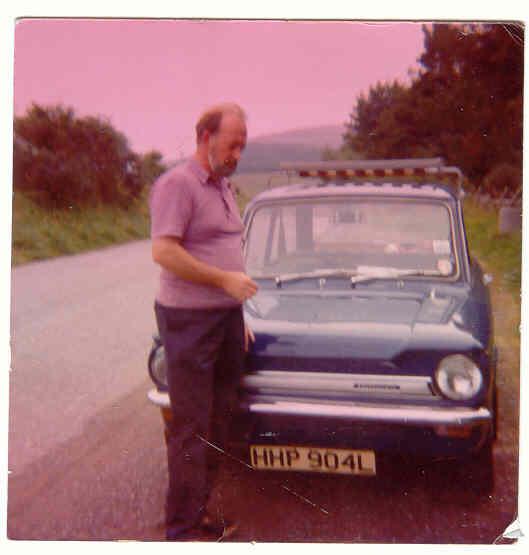
The best "Coach" a son could have
The CEO as Coach: I define coaching as "an alliance designed to promote life-long learning and help people to become more effective and feel more fulfilled." It is a developmental process that raises people's awareness and encourages them to try new behaviours, new ways of learning and new ways of relating. It nurtures a sense of responsibility, enhances problem-solving skills, fosters goal setting and builds implementation skills and more effective work habits.
The benefits of coaching include:
· Improved retention
· Better performance accountability
· Succession planning
· Truth-telling
· Reinforced culture
· Reduced employee conflict
Coaching leads to many positive outcomes at the individual and organisational levels.
For individual employees, coaching:
· Leads to breakthroughs on personal bottlenecks that limit performance
· Brings performance to its highest capacity
· Helps employees understand the intersection between themselves and their jobs
· Creates enormous gains in emotional intelligence and effectiveness in people's entire interpersonal domain
At the organisational level:
· Problems are no longer tolerated, covered up and allowed to snowball.
· The level of trust and motivation rises.
· People get better at telling the truth.
· Coaching removes barriers to people's performance.
· Performance of the management team improves dramatically.
Three conditions must exist before any company can realise the benefits of coaching.
1. Coaching must be introduced as a developmental, not as a deficit or fix-it, tool.
2. Confidentiality must be respected in all coaching situations.
3. Coaching must be voluntary.
All employees need coaching to bring the best out of the `right` people for the success of the organisational on an on-going basis.
The Art of Coaching: My method of coaching, called the "Coaching Discussion for Success," consists of five distinct steps.
1. Establish goals.
2. Promote discovery.
3. Determine a course of action.
4. Authorise and empower.
5. Recap.
Putting this process to work requires the following skills:
· Contextual listening -- listening beyond the words and paying close attention to tone of voice, body language and other nonverbal communication
· Discovery questioning -- asking open-ended questions that come from a non-expert position
· Truth-telling -- laying reality out on the table for the coach and the "client" to see
· Gap bridging -- clarifying where the client is and where they need to go, then identifying what they need to do to close the gap between the two
· Celebrating -- affirming and celebrating the client's accomplishments as you move through the process.
Conflicts often arise during coaching conversations. In those situations I always confront the issue rather than the person.
1. Get clear on what you want and why you want it.
2. Identify your contribution to the issue.
3. State what you want, your reasons for wanting it and your possible contributions to the issue.
4. Seek to understand the other person.
5. Check to see if you have learned something significant from the other person.
6. Return to step three and make any changes you believe will further the conversation.
On occasions, coaching discussions can venture into areas so sensitive that the person being coached refuses to discuss the issue. Using a risk manager can help the person open up and address the issue. To create a risk manager:
1. Identify the issue being avoided.
2. Identify the risks associated with the issue.
3. Create a risk manager (a mutual agreement to monitor and reduce the level of risk during the conversation).
4. Address the issue.
5. Manage any new risks that arise.
6. Integrate the process.
Understanding Organisational Change: Managing large-scale organisational change starts with understanding your role as change leader, the different phases of organisational change and some fundamental change management principles. During major organisational change, CEOs need to wear several different hats, including:
· Change sponsor
· Sales agent
· Change target
· Cultural touchstone
· Change energiser
Major organisational change occurs in three distinct phases: endings, the neutral zone and beginnings. Managing change during each phase requires different techniques to minimise resistance and keep people focused on the desired future state for success.
Endings
· Acknowledge what people are losing.
· When possible, compensate people for their losses.
· Provide plenty of information about the change and why it is needed. An excellent CPA (Critical Path Analysis) is required.
· Identify what is over and what isn't.
· Treat the past with respect.
· Set limits.
Neutral Zone
· Normalise the change.
· Continue to communicate in as many ways as possible.
· Monitor the transition process.
· Lead by example.
· Prepare for sabotage.
Beginnings
· Provide the four P's:
1. Purpose. Explain/reiterate the purpose of the new.
2. Picture. Paint a picture of the benefits.
3. Plan. Lay out a step-by-step plan for the change.
4. Part. Give each person a part to play so they know why it is important to join the team.
· Use reinforcement in all forms.
· Clarify the mission.
· Address the issue of trust.
In addition to managing the phases of organisational change, paying attention to the following fundamental change principles will enhance your chances for success:
· Change is a process, not an event.
· Change for change's sake is pointless.
· Resistance is normal.
· Do not take resistance personally.
· Communication is the key to success.
· Plan thoroughly.
· Make no assumptions.
· Be realistic.
If you ignore these critical areas, the change effort loses its momentum and you never really get there. Or you get there but not in the way you envisioned.
Slainte
Gordon